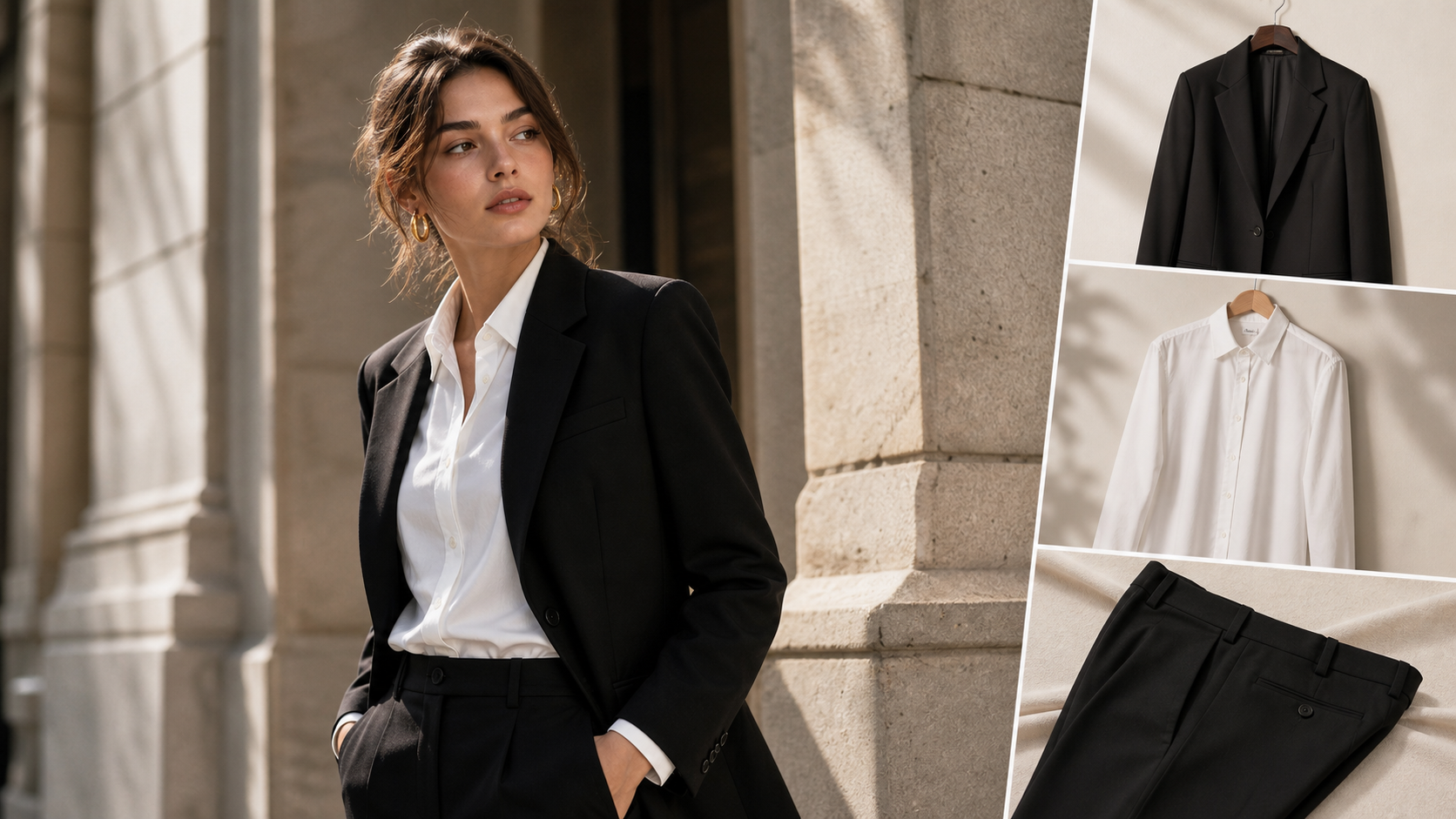
AI image generation has become commonplace in marketing—but fashion brands quickly discover that most AI prompts don’t translate into sellable product visuals. Pretty images don’t necessarily convert. What matters is fit realism, fabric texture, lighting consistency, and brand coherence across an entire campaign.
That’s where Nano Banana Pro stands out. When paired with the right prompting strategy, it becomes far more than an AI art tool—it becomes a production engine for ecommerce-ready visuals. This guide focuses on how to write a nano banana prompt for product marketing, with special attention to fashion use cases: apparel, accessories, footwear, and lifestyle campaigns.
Why Nano Banana Pro Works So Well for Fashion Marketing Visuals
Fashion imagery places unusually high demands on AI. Clothing needs to drape naturally. Materials must reflect light correctly. Proportions need to make sense on real bodies—not just look “stylized.”
As an ai product image generator, Nano Banana Pro excels because it prioritizes:
- Clean structure over abstract style
- Realistic fabric behavior
- Controlled lighting and camera logic
- High-resolution output suitable for ecommerce
This makes it especially effective for fashion brands that aren’t looking for experimental art, but for images that customers trust.
The Core Prompt Formula for Fashion Product Marketing
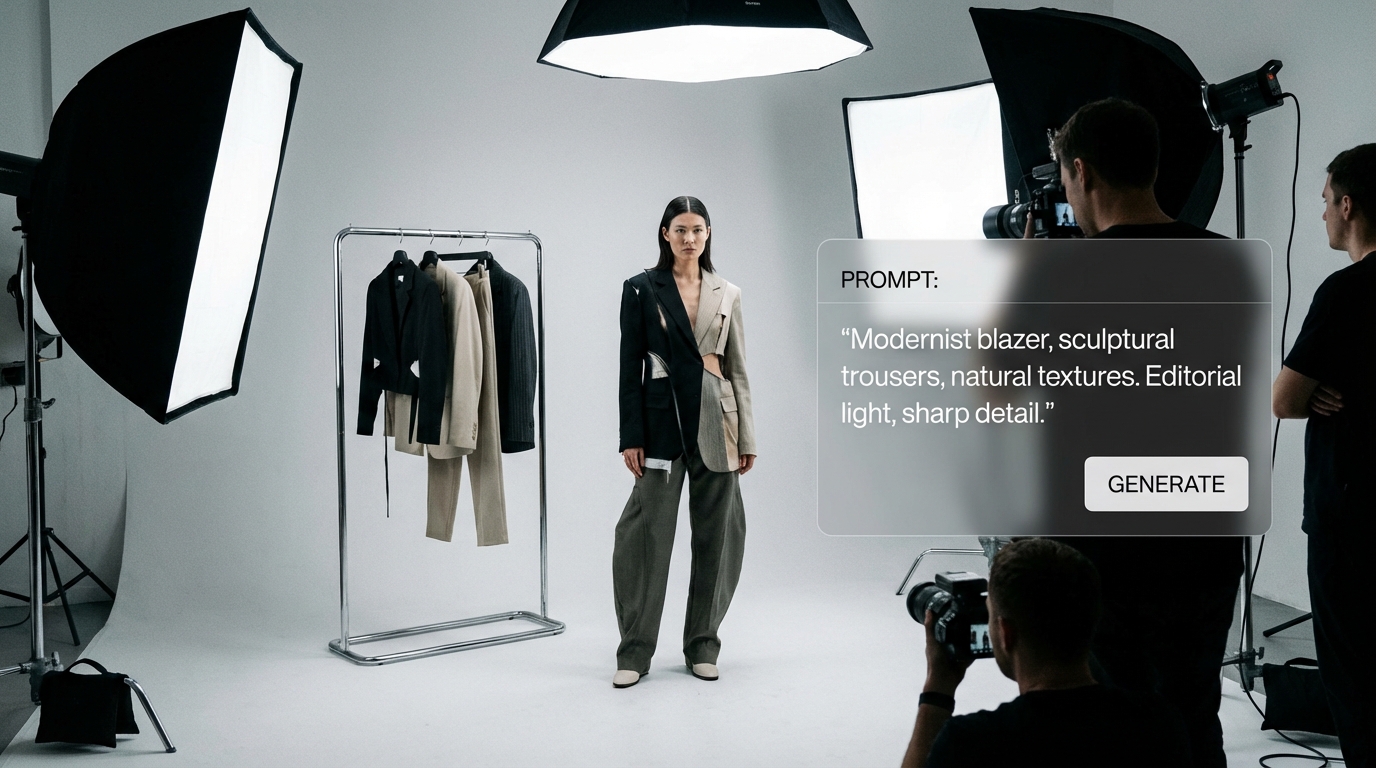
One of the biggest mistakes marketers make is treating prompts like creative writing. In reality, a strong fashion prompt behaves more like a shot list than a poem.
A reliable structure looks like this:
- Product definition – item type, fabric, color
- Model or display – model, mannequin, flat lay
- Pose and fit cues – relaxed, tailored, oversized
- Environment – studio, street, interior, runway
- Lighting and camera – softbox, natural light, 50mm
- Output intent – PDP, ad banner, lookbook
This framework is the backbone of any effective nano banana prompt guide. It keeps the model focused on commercial clarity rather than stylistic chaos.
“Product-First” vs “Lifestyle-First” Prompts (And When to Use Each)
Not all marketing images serve the same purpose. Understanding which type of prompt you need prevents wasted generations.
Product-First Prompts
These are conversion-driven visuals designed for:
- Product detail pages (PDPs)
- Catalogs
- Marketplaces
They emphasize:
- Neutral or clean backgrounds
- Accurate fit and proportions
- Clear visibility of seams, cuts, and materials
A typical nano banana product prompt here focuses on clarity, not mood.
Lifestyle-First Prompts
These are brand-building visuals used for:
- Campaign banners
- Social ads
- Lookbooks
They emphasize:
- Environment and emotion
- Styling context
- Brand personality
Both prompt types are essential—but confusing them leads to images that look good yet underperform.
Nano Banana Pro Prompt Templates for Fashion Ecommerce
When teams struggle with consistency, it’s usually because they rewrite prompts from scratch every time. Instead, high-performing teams rely on reusable templates.
Below is where nano banana pro prompt strategies shine.
Studio PDP Template
“High-resolution studio photograph of a {color} {fabric} {product}, worn by a neutral-pose model, clean seamless background, soft diffused lighting, accurate fabric texture, natural folds, centered composition, ecommerce product style.”
Editorial Lookbook Template
“Fashion editorial image of a model wearing {product}, styled for a modern urban look, natural daylight, shallow depth of field, relaxed pose, lifestyle fashion photography, brand-consistent color palette.”
Social Ad Template
“Dynamic fashion marketing image featuring {product}, energetic pose, strong contrast lighting, bold composition with negative space for text, modern campaign style.”
Detail Shot Template
“Close-up fashion detail image focusing on {fabric/zipper/stitching}, macro-style clarity, realistic material texture, studio lighting, high sharpness.”
These templates form the foundation of scalable nano banana pro ai prompts for fashion teams.
Fashion “Try-On” Marketing: How to Keep Clothing Realistic
One of the biggest opportunities in AI fashion marketing is try-on-style imagery—but it’s also where most models fail.
To keep clothing believable:
- Specify fabric weight (light cotton, heavy denim, knit)
- Mention drape behavior (structured, flowing, oversized)
- Control body posture (standing relaxed, walking, seated)
- Avoid vague phrases like “perfect fit”
This is where carefully written nano banana pro ai prompts dramatically outperform generic prompts. Precision beats creativity when realism is the goal.
Creative Direction Controls: Lighting, Lens, Angles, and Backgrounds
Fashion brands live or die by consistency. Nano Banana Pro responds exceptionally well when you treat prompts like art direction notes.
Lighting
- Softbox studio lighting for PDPs
- Natural window light for lifestyle
- Evening or neon lighting for streetwear
Camera & Lens
- 35mm for editorial storytelling
- 50mm for product accuracy
- 85mm for portrait-focused fashion
Backgrounds
- Seamless white or gray for ecommerce
- Textured walls for minimal brands
- Cafés, streets, interiors for lifestyle
Locking these variables across prompts creates campaign-level coherence.
Conversion-Ready Outputs: Images for PDP, Ads, and Social
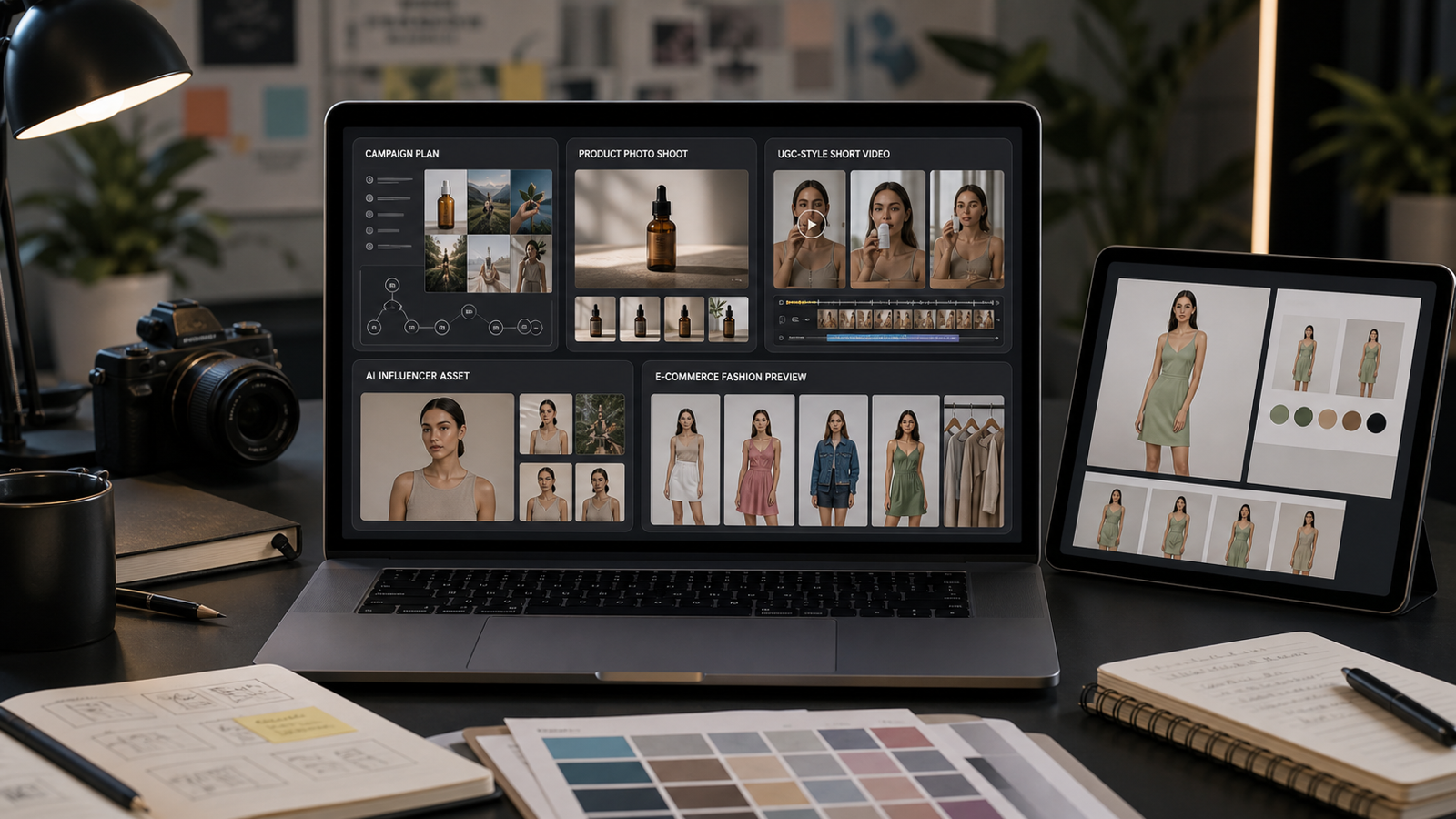
A single fashion product typically needs multiple image types:
- PDP hero image – clear, centered
- Angle variations – front, side, back
- Detail shots – fabric, closures
- Lifestyle image – context and emotion
- Ad-friendly version – negative space for copy
Nano Banana Pro can generate all of these efficiently—as long as prompts are structured intentionally.
Mistakes Marketers Make with Fashion Prompts (And Fixes)
Even experienced teams fall into common traps:
Mistake: Overusing Style Words
Fix: Replace “luxurious, trendy, aesthetic” with lighting and fabric cues.
Mistake: Ignoring Lighting Direction
Fix: Always specify light source and softness.
Mistake: Inconsistent Brand Identity
Fix: Reuse the same camera, lighting, and palette language.
Most failures aren’t model limitations—they’re prompt design issues.
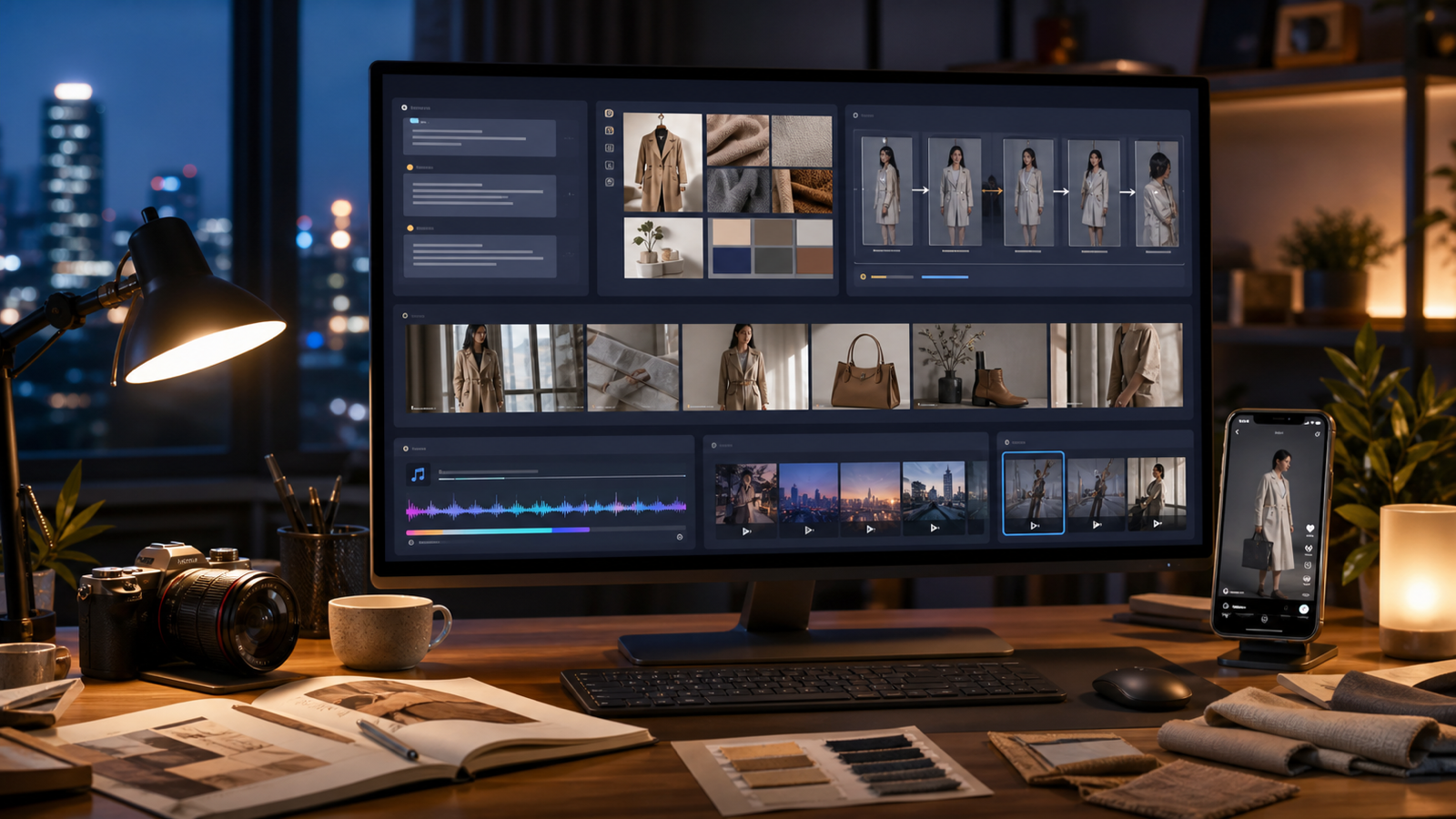
Workflow: From Prompt to Campaign Set (Repeatable Process)
A repeatable fashion workflow looks like this:
- Define product and campaign goal
- Choose product-first or lifestyle-first
- Lock lighting and camera language
- Generate hero image
- Generate variants (angles, colorways)
- Generate detail shots
- Finalize a consistent image set
Teams that follow this structure build libraries of prompts instead of reinventing the wheel.
Final Recommendation: Use Virtual Try On AI for Fashion Marketing
Once you’ve generated strong fashion visuals with Nano Banana Pro, the next step is turning them into try-on-focused marketing assets.
That’s why we recommend using Virtual Try On AI. It allows fashion brands to:
- Create realistic try-on visuals from AI-generated images
- Showcase fit and styling variations
- Improve customer confidence and engagement
Used together, Nano Banana Pro and Virtual Try On AI form a complete pipeline—from product prompt to conversion-ready fashion marketing visuals.
In fashion marketing, the goal isn’t just to generate images. It’s to generate trust.