Finding the perfect pair of glasses has never been easy. Frames that look great on the shelf often feel completely different once worn. Face shape, nose bridge height, lens size, and color all play a role—and traditionally, the only solution was trying dozens of frames in person.
Today, that experience has transformed thanks to advanced tools like the
AI glasses try on system powered by cutting-edge computer vision and generative AI. These platforms let you preview frames digitally with remarkable accuracy, all from your phone or laptop.
This guide explores how the technology works, why it’s so effective, how to use the virtual glasses try on interface step-by-step, and why AI is becoming the future of eyewear shopping.
What Is an AI Glasses Try-On Tool?
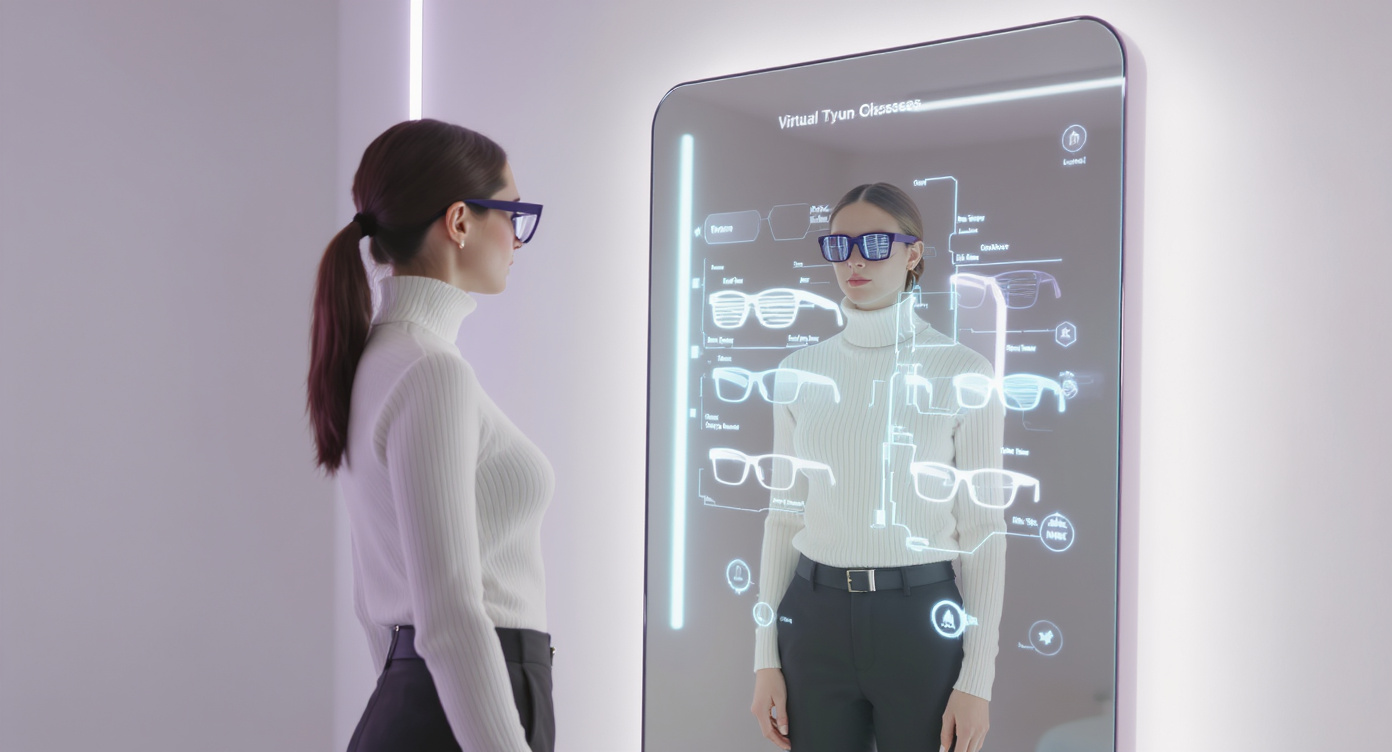
An AI try-on tool uses facial detection, deep-learning modeling, and augmented rendering to place virtual glasses on your face in a natural, realistic way. The process analyzes face shape, symmetry, and features to align frames convincingly.
Platforms like
AI eyewear try on
combine:
- Face-scanning models
- 2D/3D eyewear templates
- Image-to-image AI transformation
- Lighting and shadow simulation
- Material-aware rendering
The result is an ultra-realistic digital preview—far beyond old-school AR filters.
Whether you need prescription glasses or trendy sunglasses, the online glasses try on tool eliminates guesswork and boosts confidence when choosing a frame.
Why Use an AI Glasses Fitting Tool?
Here are the biggest benefits of trying on eyewear using AI:
1. See Exactly How Frames Fit Your Face
The algorithm analyzes key facial landmarks such as:
- Pupillary distance
- Cheek width
- Jawline shape
- Nose structure
This allows the system to recreate size, spacing, and angle proportionally.
2. Preview Multiple Styles Instantly
Instead of trying pairs one-by-one in-store:
- Square
- Round
- Cat-eye
- Aviator
- Oversized
You can switch styles in seconds with the
try on glasses with AI tool.
3. Accurate Color & Material Simulation
AI enhances:
- Reflections on lenses
- Frame glossiness
- Matte or metal textures
- Shadows on the face
Creating a true-to-life visual result.
4. No More In-Store Pressure
Test as many frames as you want—privately, confidently, and at your own pace.
5. Perfect for Online Eyewear Shopping
Since you can't physically test frames online, the
AI glasses fitting
bridge the gap between digital browsing and realistic previewing.
A Look at the AI Glasses Try-On Interface
(Based on the provided screenshot)
When you open the virtual eyewear try on interface, you’ll see a clean and intuitive layout.
1. Select Model
At the top, you can choose the AI model such as “Seedream 4.0,” which handles rendering quality and realism.
2. Upload Personal Image
You can upload a clear portrait (JPG, WEBP, PNG).
Pro tip: Use good lighting and face the camera directly.
3. Choose Eyewear Frame
The interface includes a library of frame thumbnails. Choose from:
- Classic black frames
- Metallic round frames
- Oversized sunglasses
- Modern geometric frames
These templates power the AI sunglasses try on experience.
4. Optional: Enter a Prompt
The prompt box allows special instructions such as:
“Make the person wear the glasses from the second picture.”
This is useful for creators and product demos.
5. Adjust Aspect Ratio & Resolution
Aspect ratio options include:
- 1:1
- 3:4
- 9:16
Resolution selection allows high-quality exports (e.g., 2K).
6. Generate the Preview
Click Generate to produce your
glasses try on generator output within seconds.
How AI Glasses Try-On Technology Works
Step 1: Face Scanning
The ai face scan glasses try on system maps:
- Eye spacing
- Facial angles
- Forehead width
- Nose bridge height
This ensures frames sit naturally.
Step 2: Smart Frame Alignment
Using deep-learning landmarks, the AI positions glasses precisely:
- Matching temple angles
- Ensuring lens center alignment
- Adapting frame width to face width
Step 3: Photorealistic Rendering
The eyewear virtual try on AI system handles:
- Realistic shadow mapping
- Light reflections
- Lens tinting
- Material highlights
This gives a natural "worn" appearance.
Step 4: Consistency Check
AI compares the rendered output to your original portrait to confirm proportions and accuracy.
Step 5: Exporting
You get a ready-to-share preview image based on the settings chosen.
Who Can Benefit from AI Optical Try-On Tools?
1. Everyday Eyewear Shoppers
Choosing glasses is stressful. The
AI powered glasses preview
makes the decision easier.
2. Sunglasses Buyers
Trying trendy sunglasses instantly with
online sunglasses try on AI
helps avoid mismatches with your face shape.
3. Eyewear Retailers
Integrate virtual fitting into your store to boost conversions.
4. Influencers & Content Creators
Make styled eyewear shoots without needing physical frames.
5. Optical Stores & E-Commerce Brands
Customer confidence increases dramatically with accurate try-ons.
How to Use the AI Glasses Try-On Tool (Step-By-Step)
Below is a full walkthrough using the screenshot layout.
Step 1: Upload a Clear Portrait
Go to
AI glasses try on
and hit Upload Personal Image.
Guidelines:
- Front-facing photo
- Good lighting
- No heavy shadows
- Hair pulled back if possible
- No glasses worn
Step 2: Select a Glasses Template
Choose from dozens of styles:
- Fashion-forward
- Minimalist
- Retro
- Sporty
- Premium metal
This powers the AI eyewear try on gallery.
Step 3: Write an Optional Prompt
Examples:
- “Give a natural fit with soft shadows.”
- “Render the frame at a slight angle.”
- “Match lighting to the original portrait.”
This step enhances the digital glasses fitting accuracy.
Step 4: Choose Aspect Ratio
Select from:
- 1:1 (best for social media)
- 4:5
- 9:16
This adjusts the visual layout of your final
ai optical try on tool preview.
Step 5: Select Resolution
Options include 1K, 2K, or higher depending on your needs.
Creators and retail brands often use 2K for clarity.
Step 6: Generate Your Virtual Try-On
Click Generate 30 (or equivalent token requirement).
Within seconds, your completely personalized
ai powered glasses preview
is ready.
Best Practices for Getting the Most Accurate Results
1. Use High-Resolution Photos
AI performs best when the face is detailed.
2. Face the Camera Directly
Angled photos may distort frame alignment.
3. Avoid Busy Backgrounds
Clear, neutral backgrounds work best.
4. Take Off Your Current Glasses
This prevents layering glitches in the
virtual glasses try on output.
5. Test Multiple Styles
Even options you wouldn’t normally consider—AI helps uncover surprising fits.
The Future of AI Eyewear Try-On Technology
AI-based tools are evolving rapidly. Soon we can expect:
- Real-time webcam try-on
- Full 3D face mapping
- Personalized frame recommendations
- Lens simulation with prescriptions
- Virtual fashion styling with accessories
The rise of
ai sunglasses try on
and digital fitting experiences reflects a shift toward fully virtual shopping experiences—convenient, reliable, and personalized.
Final Thoughts
The AI glasses try on experience marks a turning point in eyewear shopping. By giving users realistic, high-quality previews, AI eliminates guesswork and builds buying confidence.
Whether you’re looking for stylish sunglasses, everyday prescription frames, or simply experimenting with new looks, the
glasses try on generator
is an easy, fast, and reliable way to explore your perfect match.
Try it now and see how effortlessly technology transforms your eyewear experience.